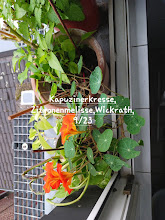
Dienstag, 8. Oktober 2024

08.10.2024 - José Saramago & Nobelpreis 1998 und Vorwand & religiöse Gefühle und Exil & Lanzarote etc.

dali48 and menaced private tuition since 1989, and writing diary & books and photographing in Erkrath till 5/2010

Each day is our whole life - from sunrise to sunset etc… (dali48) 
Let go of something you like, and realize how fleeting it is by living without it... (Ayya Khema / dali48) 
Buddha realized that all living beings suffer because they desire and cling ... - Peace is an inner attitude to life that consists of letting go and renunciation (see e.g. nuns & monks etc. - d.48) ... (Buddha / dali48) 
Das Leben im Daseinskreislauf ist leidvoll: Geburt ist Leiden, Altern ist Leiden, Krankheit ist Leiden, Tod ist Leiden; Kummer, Lamentieren, Schmerz und Verzweiflung sind Leiden." (Buddha)
Bilder
Amazon.de: dali48: books, biography, latest update
ediary4 by dali48
diary 3 : by dali48 on twitter (Paperback)

José Saramago war ein portugiesischer Romancier, Lyriker, Essayist, Erzähler, Dramatiker und Tagebuchautor. 1998 wurde ihm der Nobelpreis für Literatur verliehen. Wikipedia

Der Standesbeamte fügte auf eigene Initiative den Beinamen „Saramago“ zu seinem eigentlichen Namen „José de Sousa“ hinzu, durch den die Familie seines Vaters im Dorf bekannt war. Saramago ist der Ackerrettich, der den Armen in Portugal als Nahrung diente, ähnlich der wilden Rauke in früheren Zeiten in Deutschland.

1924 zog die Familie als Landflüchtlinge nach Lissabon, wo der Vater eine Anstellung als Polizist fand. Wenige Monate nach dem Umzug starb sein ältester Bruder Francisco. Immer wieder verbrachte Saramago längere Zeit seiner Kindheit bei seinen Großeltern mütterlicherseits auf dem Land in Azinhaga. Er hatte exzellente Zeugnisse, doch seine Familie konnte nach zwei Jahren auf dem Gymnasium (Liceu Gil Vicente) den Schulbesuch nicht weiter finanzieren.

1936 schenkte ihm seine Mutter sein erstes Buch: „A Toutinegra do Moinho“ (La Fauvette du Moulin) von Émile de Richebourg, ein Feuilletonroman mit sozialkritischem Einschlag. Saramagos Mutter war Analphabetin, und sein Vater konnte die Buchstaben aneinanderreihen und Worte lesen. Saramago war 19 Jahre alt, als er zum ersten Mal, mit von einem Freund geliehenem Geld, eigene Bücher kaufen konnte.

1949 wurde Saramago aus politischen Gründen entlassen.

Diese Tertúlias wurden vom Diktator Salazar toleriert, um sie auch durch die Spitzel der Geheimpolizei PIDE zu beobachten.

Ab 1955 arbeitete Saramago zusätzlich als Übersetzer von ColettePär LagerkvistJean CassouMaupassantAndré BonnardTolstoiBaudelaireÉtienne BalibarNikos PoulantzasHenri FocillonJacques RoumainHegelRaymond Bayer für verschiedene Verlage.

Als Portugal 1974 mit der Nelkenrevolution mit einem friedlichen Militärputsch durch Ablösung der jahrzehntelangen Diktatur Estado Novo die Demokratie erlangte, arbeitete Saramago vorübergehend für das Bildungsministerium und für das Ministerium für soziale Kommunikation.

Der Alentejo ist die Heimat der Korkeiche, „die in vollster Lebensblüte steht

Die Besetzungen der Latifundien durch die Landarbeiter nach der Nelkenrevolution bilden den hoffnungsvollen Schlusspunkt der klerikalfaschistischen Diktatur: von nun an besteht die Hoffnung nicht mehr geknechtet, sondern tatsächlich „vom Boden erhoben“ (levantado do chão) zu leben.

Er beschreibt die Zeit der Inquisition im absolutistischen Portugal des 18. Jahrhunderts aus der Sicht „des kleinen Mannes“, den Bau des Palácio Nacional de Mafra, an dem 50.000 Arbeiter unter unmenschlichen Bedingungen arbeiteten und 2000 Menschen starben.

Saramagos unter dem Vorwand von der Liste der Kandidaten für den Europäischen Literaturpreis strich, der Roman verletze die religiösen Gefühle der katholischen Portugiesen, und so seinem neuen Buch die Teilnahme verweigerte. Saramago und seine Frau gingen ins Exil und verlegten als Protest gegen die Regierung ihren Wohnsitz auf die kanarische Insel Lanzarote, wo er bis zu seinem Tod lebte

Saramago in seinem Internetblog, ... scharfe Kritik am globalisierten Kapitalismus

José Saramago starb am 18. Juni 2010 nach langer Krankheit im Alter von 87 Jahren in seinem Haus in Tías auf Lanzarote.[6]

see dali48 and reading & writing about the Nobel Prize in Literature (siehe Literaturnobelpreisträger 1957 - 2023 etc.)
Camus (1957) | Pasternak (1958) | Quasimodo (1959) | Perse (1960) | Andrić (1961) | Steinbeck (1962) | Seferis (1963) | Sartre (1964) | Scholochow (1965) | Agnon/Sachs (1966) | Asturias (1967) | Kawabata (1968) | Beckett (1969) | Solschenizyn (1970) | Neruda (1971) | Böll (1972) | White (1973) | Johnson/Martinson (1974) | Montale (1975) | Bellow (1976) | Aleixandre (1977) | Singer (1978) | Elytis (1979) | Miłosz (1980) | Canetti (1981) | García Márquez (1982) | Golding (1983) | Seifert (1984) | Simon (1985) | Soyinka (1986) | Brodsky (1987) | Mahfuz (1988) | Cela (1989) | Paz (1990) | Gordimer (1991) | Walcott (1992) | Morrison (1993) | Ōe (1994) | Heaney (1995) | Szymborska (1996) | Fo (1997) | Saramago (1998) | Grass (1999) | Gao (2000) | Naipaul (2001) | Kertész (2002) | Coetzee (2003) | Jelinek (2004) | Pinter (2005) | Pamuk (2006) | Lessing (2007) | Le Clézio (2008) | Müller (2009) | Vargas Llosa (2010) | Tranströmer (2011) | Mo (2012) | Munro (2013) | Modiano (2014) | Alexijewitsch (2015) | Dylan (2016) | Ishiguro (2017) | Tokarczuk (2018) | Handke (2019) | Glück (2020) | Gurnah (2021) | Ernaux (2022) | Fosse (2023)

08.10.2024 - W. Trautmann and C.G. Jung and "shadow" & "mea culpa" & scapegoat and suffering & imagination etc.

dali48 and writing diary & books and photographing near spa house in BAD, 8/2010 etc.
Each day is our whole life - from sunrise to sunset etc… (dali48) 
Let go of something you like, and realize how fleeting it is by living without it... (Ayya Khema / dali48) 
Buddha realized that all living beings suffer because they desire and cling ... - Peace is an inner attitude to life that consists of letting go and renunciation (see e.g. nuns & monks etc. - d.48) ... (Buddha / dali48) 
Das Leben im Daseinskreislauf ist leidvoll: Geburt ist Leiden, Altern ist Leiden, Krankheit ist Leiden, Tod ist Leiden; Kummer, Lamentieren, Schmerz und Verzweiflung sind Leiden." (Buddha)
Bilder
Amazon.de: dali48: books, biography, latest update
ediary4 by dali48
diary 3 : by dali48 on twitter (Paperback)

see dali48 and reading & writing about Psychology & Psychiatry and e.g. Freud, Adler, Jung, and Groddeck, Frankl, Fromm, Reich, and Laing, Cooper, and M. Rufer, A. Wolf-Schuler, T. Wollf, I. D. Yalom, J. Bradshaw, V. Kast, A. Lowen, E. Reich, P. Lauster, P. Schellenbaum, J. Murphy, S. Steinbrecher, E. Kübler-Ross, R. A. Moody, K. Ring, I. D. Suttie, E. Jacobson, S. Forward, H. Gastager, C. M. Steiner, W. G. Niederland, R. Funk, N. Schwartz-Salant, A. Janov, A. & M. Mitscherlich, H. König etc. 

21.05.2000 - Interpretation of dali48
This is how we all are:
Whoever has not loved, has been sick, lost a woman, a man or a child by death, has been persecuted, expelled, captured, deceived or abandoned by the spouse - can not sympathize... - This, I now know, is deeply psychological the reconciliation with the "shadow" of my psyche. - I have become free from the negative ties to people who have hurt me or who have been guilty of me... - "The gigantic catastrophes that threaten us are also" according to C.G. Jung, "no elementary events of physical or biological nature - but mental events!"... - The psychic is a magnificence which exceeds all the powers of the earth many times! - Only the recognition of this fact, the common "mea culpa" - would lead out of the madness circle of mutual accusations, offenses, and scapegoat projections... - Death makes us dumb - as long as it leads to the realization of our own nullity. - Every illness causes a neurosis - Every neurosis demoralizes... - I have learned to let as it is what is unexplainable to the human being, what remains a mystery! - The physical infirmities are cured more energetically - not so the psychological sufferings of mankind... - For not the most active person is the really helpful, as in pain, which makes us loudly screaming - but the passive listener... - Only the ability to overcome such change processes and adapt ourselves - is life, and lets survive us at all... - What can not be avoided, should be suffered! - Who opposes his suffering - denies its change... - Suffering is in contrast to pain - something quiet, personal, secret... - Everywhere envy, abuse, ignorance, slander - and hybrid self-assessment! - You consume not only food and drink - you also need.. - "We live as in ancient Rome" - We live the life of a dooming society... - It is the imagination that moves our world... (W. Trautmann)

... Wake, HCE sympathetically joins the Russian General in a universal mea culpa. ... The subject who has projected his guilt onto another can then wage a moral ... mechanism of projection has its social analogue in the scapegoat ritual.

Apr 2, 2014 - Carl Jung was born on July 26, 1875, in Kesswil, Switzerland. Jung believed in the “complex,” or emotionally charged associations. ... Jung founded analytical psychology, advancing the idea of introvert and extrovert personalities, archetypes and the power of the unconscious.

08.10.2024 - H. & G. Schreiber & freemasonry and Diderot & Enlightenment & French revolution etc.

dali48 and writing books and photographing apple blossoms in the park of Wickrath etc.
Each day is our whole life - from sunrise to sunset etc… (dali48) 
Let go of something you like, and realize how fleeting it is by living without it... (Ayya Khema / dali48) 
Buddha realized that all living beings suffer because they desire and cling ... - Peace is an inner attitude to life that consists of letting go and renunciation (see e.g. nuns & monks etc. - d.48) ... (Buddha / dali48) 
Das Leben im Daseinskreislauf ist leidvoll: Geburt ist Leiden, Altern ist Leiden, Krankheit ist Leiden, Tod ist Leiden; Kummer, Lamentieren, Schmerz und Verzweiflung sind Leiden." (Buddha)
Bilder
Amazon.de: dali48: books, biography, latest update
ediary4 by dali48
diary 3 : by dali48 on twitter (Paperback)

23.06.2000 - Interpretation of dali48
The police and the church joined to pursue the freemasons, as if they had anticipated that the freemason Diderot, with his great encyclopaedia, would create the spiritual basis for the great French revolution...
Where secret societies work, something new will emerge - which might not have arisen in the merciless light of the day - They used the darkness, and the darkness is of use to them, and the nights are fruitful, since life consists of day and night... (H. & G. Schreiber)

Denis Diderot (French: [dəni did(ə)ʁo]; 5 October 1713 – 31 July 1784) was a French philosopher, art critic, and writer, best known for serving as co-founder, chief editor, and contributor to the Encyclopédie along with Jean le Rond d'Alembert. He was a prominent figure during the Enlightenment.
Main interests‎: ‎Science, literature, philosophy, art
School‎: ‎Encyclopédistes‎; ‎French materialism‎; ...
Region‎: ‎Western philosophy