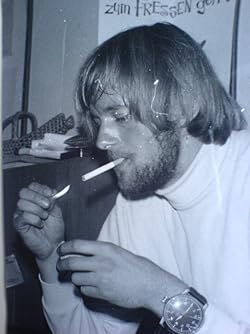
dali48 and playing chess and stopping smoking as a sport student in the 70s etc...
File: Amitabha.JPG
16.09.2001 - Interpretation of dali48
In the time of transition (spiritual crisis, etc.) your first priority should be to address your own health-promoting needs - Before you turn your attention to the outside, you have to nurture yourself - Overall, there is more tolerance in our culture for artistically expressed insights (see e.g. books by dali48 etc. - d.48) - as for direct verbal transmission - Humility is one of the most important qualities of truly spiritual evolved humans. During your spiritual crisis, you then experience your birth again and face death, and you realize that life is more than you thought - You have various out-body experiences (see near-death, etc. - d.48) and learn - that you are more than a physical being - In addition, you may have had a mystical experience of the unity of all life and realize that you can not hurt others - without hurting yourself ... (C. & S Grof)
Stanislav "Stan" Grof (born July 1, 1931) is a Czech psychiatrist, one of the founders of the field ... Grof received his M.D. from Charles University in Prague in 1957 and then completed his Ph.D. in medicine at the Czechoslovak Academy of ...
Spouse(s): Brigitte Grof since April 2016
Influences: Otto Rank
Born: 1 July 1931 (age 88); Prague, Czechosl...
Fields: Psychology, psychiatry
Interpretation of dali48
As a mystical experience, punctual, individual inner experiences of a person are referred to, in which the normal everyday consciousness of a person is transcended in a certain way and a special, intuitive, not communicable insight is gained over the universe of reality. It is a kind of spontaneous breakthrough of consciousness from a subjective-relative to an objective-absolute level - The intensity of mystical experiences can be measured by certain criteria and described in the terminology of trans-personal psychology. For example, deity mysticism, in which the union with "God" or a deity is experienced, is experienced differently than nature mysticism, in which one experiences oneself as a unity with nature - One speaks of the mystical experience of an enlightenment only if these with it accompanying changes in the person are irreversible - The term is then transferred to the fundamental, ongoing new constitution of the enlightened one - Mystical experiences are socio-culturally invariant experiences that - similar to the near-death experiences (see Kübler-Ross, Mooney, etc. - d.48) often cause a fundamental change in a person's life - Everyday consciousness can change irreversibly. Often, everything that previously seemed to have been important in life is given up - According to Ken Wilber, the interpretation of the experiences takes place according to the level of consciousness on which the person is permanently resident. All religious traditions know mystical experiences. In India, yoga has probably first developed a method for those seeking enlightenment, and in Buddhism, a special culture of seeking enlightenment has developed over 2500 years - However, there are many significant mystics in church history, such as e.g. Meister Eckhart. Ultimately, every saint of the Catholic Church should be understood by this - Looking for the so-called "divine spark" (scintilla animae) in man. For example, the Islamic Sufis and the Jewish Kabbalah - Each mystical tradition has its own model in which it seeks to grasp various levels of enlightenment or cognition - This division of the "way" or "rise" into one multi-part episode can be arbitrarily subtle. Ultimately, however, it always describes the same process that seekers have to go through - By way of example, a three-part distinction reduced to the essentials is presented, as it is found in Zen:
Samadhi refers to the state of consciousness of total absorption in mindfulness, which is the basis for further progress - Kensho is the name for initial awakening experiences that anticipate shortcoming of the overcoming of subject-object-splitting - Satori becomes the final one called enlightenment, but it can itself be of varying intensity - The recognition of the awareness underlying the process of enlightenment is called Buddha-nature - Mystic experiences are interpreted by critics as a result of manipulated states of consciousness - A "real" mystic experience is therefore difficult to distinguish from autosuggestion, self-hypnosis, trance, lucid dream, out-of-body experiences, intoxication, ecstasy, psychosis and charlatanry - Mystical experiences are not recognized by an atheistic, materialistic worldview ... (Wikipedia)
Near-death experience...
Heinrich Dumoulin (ed.): Buddhism of the Present, Frankfurt 1970...
Dorothee Sölle: The outward journey. For Religious Experience, Stuttgart 1977...
en.wikipedia.org › wiki › Near-death_experience
Near-death experience - Wikipedia
A near-death experience (NDE) is a profound personal experience associated with death or impending death which researchers claim share similar ...
dali48author @dali48
05.10.2015 - Autoreninterview.doc - https://docs.google.com/document/d/17Rwx8zAt1OxVtCsQpg0YqSew0PWjCf6g5z-VclflnoY/edit?usp=sharing … see dali48 on Google,Blogspot,Bod.de,StumbleUpon,Pinterest,Twitter,Goodreads...
 amazon.com/author/dali48 Share
 this URL:
 diary3 by dali48 on twitter

Collection ediary 6-12 of dali48
dali48 and writing books and cycling and photographing etc...
see dali48 and warning of neo-fascism since 1989 and Climate Change since ca. 2000 and "Banking Crisis" 2008 and poor people and social diseases and speculation and homelessness and robots etc. - instead of UBI & Ecology - Uncontrolled capitalism produces evil as bees produce...
see dali48 and Climate Change and heat waves and dryness and burning (Australia, Amazonas etc.) and also floods and hurricanes etc. - since ca. 2000 and despite Copenhagen 2009 etc. - instead of #ZeroHunger, solar & wind energy & UBI etc...
Don't see swallows here in Wickrath (2018) as before at Lake Unterbach where they were deeply flying before the rain, and were nearly touching my head till 2010... (dali48)
see E. Kuebler-Ross and R. Moody and Near Death Experiences - and my own experiences in the 80s and 12/2011 etc... (dali48)
see our planet and environment and deforestation and climate change and pollution and destructive traffic everywhere - instead of #ZeroHunger, UBI and surviving etc... (dali48)
see dali48 and world view 1968 etc. - compared with 1989 and 2008 etc...
Deposit on plastic & better recycling & cleaning, see e.g. www.rhinecleanup.org & biodegradable "plastic" bags - instead of polluting rivers & lakes & sea with waste etc... (dali48)
Concerning overfishing & polluting & damaging the oceans with garbage patches & ‘dead zones’ etc. - instead of e.g. www.rhinecleanup.org, see Golding & "Man produces evil - as Bees produce honey" etc... (dali48)
Concerning overfishing & polluting & damaging the oceans with garbage patches & ‘dead zones’ etc. - instead of e.g. www.rhinecleanup.org, see Golding & "Man produces evil - as Bees produce honey" etc... (dali48)
see @UNrightswire, see Human Rights & Clean Air & Drinking Water & Food & UBI - instead of destructive traffic, e.g. @BeijingAir & privatisation of drinking water & other violations etc... (dali48)
see dali48 and reading and writing and walking and cycling and photographing - and without car since 2004 etc...
Why bees etc. - are dying by the billions see pesticides and #Neonics http://bit.ly/1vJ6vI6 = 5000 times more toxic to bees than DDT etc... (dali48)
see dali48 and Human Rights (1948), warning of neo-fascism since 1989, and of Climate Change, and for Net Neutrality & Ecology & Biodiversity since ca. 2000, and for UBI instead of HartzIV, and against rental usury, lobby donations since 2008, and against 80 000 Millions for arms...
see Ban of Basic Rights & Net Neutrality & Privacy - instead of democratic control of #Polizeigesetz and introducing a UBI etc... (dali48)
see Ban of Basic Rights & Net Neutrality & Privacy - instead of democratic control of #Polizeigesetz and introducing a UBI etc... (dali48)
see National Socialist tyranny and History produced evil - as Bees produced honey etc... (dali48)
see dali48 and warning of neo-fascism since 1989, of Climate Change, and for Ecology & Biodiversity since ca. 2000, and for UBI since 2008... Why is there no Basic Income in Europe etc. - instead of Hartz IV and "Banking Crisis" 2008 and neo-fascism etc.? (dali48)
Steven David Horwich @homeschoolcurr Want to ban homeschool? So did the Nazis. Read about it at bit.ly/lZkLNv... Retweeted by dali48
siehe dali48 und "Petition unterschreiben Bundesrat: AFD nach Artikel 21 GG verbieten lassen... change.org"
see dali48 and deforestation and Climate and species extinction by pesticides, leaf blowers etc. - and Human Rights violations instead of Biodiversity and UBI etc...
see beautiful wildflower havens and UBI - instead of tax havens and violations of Human Rights etc... (dali48)
see Con Gen ShanghaiAir @CGShanghaiAir - 2020-01-17 11PM - PM2.5 - 159 AQI - Unhealthy (at 24-hour exposure at this level)...
01-15-2019 18:00; PM2.5; 37.0; 105; Unhealthy for Sensitive Groups (at 24-hour exposure at this level)
see dali48 and "Those who will exclude any of God's creatures from the shelter of compassion and pity (see e.g. chick shredding etc.) - will deal likewise with their fellow man." (Francis of Assisi)
Concerning chick shredding, see St Francis and animals - see IB Singer and Treblinka - see Albert Schweitzer Foundation for our world around etc... (dali48)
Concerning chick shredding, see St Francis and animals - see IB Singer and Treblinka - see Albert Schweitzer Foundation for our world around etc... (dali48)
see bumble bees and bees again on lavender during my daily walk in the park since June 2018 etc... (dali48)
Marc Rufer etc...
and fresh water etc. - see seagulls from the coast of the Netherlands coming for fodder in winter - see "Flora and Fauna" since ca.2000 etc...
"Where they ban private tuition and books - they also ban teachers and authors at the end" ... (dali48, 2019)
see dali48 and why don't these millionaires unite - and pay a small UBI to the poorest of people?
 henk tennekes
Das grosse Neonics Desaster. Seit 1995 sind bis zu 80 Prozent der Biomasse aller Fluginsekten in NRW verschwunden http://www.farmlandbirds.net/de/content/innerhalb-der-vergangenen-20-jahre-sind-bis-zu-80-prozent-der-biomasse-aller-fluginsekten-no …
Concerning road traffic: Urban areas must be safer for pedestrians and cyclists etc... (dali48)
etc... (dali48)
see Ban of Basic Rights and Net Neutrality & Privacy - instead of saving the Internet and introducing UBI etc. (dali48, 2019)
see dali48 and Deforestation and Climate Change and #ExtinctionRebelion and Human Rights violations instead of UBI etc...
see dali48 and The majority of diseases that plague humanity are all rooted in a polluted environment (see e.g. Roundup, Glyphosat etc. - d.48)... (Change.org)
Concerning the dying of the bees etc. - see neonics etc.- "Man produces evil - as Bees produce honey"... (dali48)
siehe 19.07.2019 - Torben Schiffer und Bienenforschung und zurück zur Natur, see https://beenature-project.com/de etc... (dali48)
Concerning deforestation & polluting rivers & burning forests etc. - instead of a monthly UBI - uncontrolled Capitalism produces evil as bees produce honey... (dali48)
see dali48 and reading and writing about the Nobel Prize in Literature from 1957 Albert Camus to 2017 Kazuo Ishiguro etc...
see dali48 and bread and laser show - instead of fireworks etc...
see I.B. Singer and Treblinka and PETA (People for the Ethical Treatment of Animals) - see e.g. chick shredding etc. - see William Golding and "Man produces evil - as Bees produce honey" etc... (dali48)
Concerning road traffic: Urban areas must be safer for pedestrians and cyclists etc... (dali48)
etc... (dali48)
see Ban of Basic Rights and Net Neutrality & Privacy - instead of saving the Internet and introducing UBI etc. (dali48, 2019)
Apr 14
On the train to the EU Parliament, the Italian Senate, the Vatican and House of Parliament during the Easter holiday. And on Friday I’ll participate in the school strike in Rome. I know it’s a holiday but since the climate crisis doesn’t go on vacation nor will we. #Climatestrikesee dali48 and Deforestation and Climate Change and #ExtinctionRebelion and Human Rights violations instead of UBI etc...
see dali48 and The majority of diseases that plague humanity are all rooted in a polluted environment (see e.g. Roundup, Glyphosat etc. - d.48)... (Change.org)
Concerning the dying of the bees etc. - see neonics etc.- "Man produces evil - as Bees produce honey"... (dali48)
siehe 19.07.2019 - Torben Schiffer und Bienenforschung und zurück zur Natur, see https://beenature-project.com/de etc... (dali48)
Concerning deforestation & polluting rivers & burning forests etc. - instead of a monthly UBI - uncontrolled Capitalism produces evil as bees produce honey... (dali48)
see dali48 and reading and writing about the Nobel Prize in Literature from 1957 Albert Camus to 2017 Kazuo Ishiguro etc...
see dali48 and bread and laser show - instead of fireworks etc...
see I.B. Singer and Treblinka and PETA (People for the Ethical Treatment of Animals) - see e.g. chick shredding etc. - see William Golding and "Man produces evil - as Bees produce honey" etc... (dali48)
dali48author @dali48"Er ist wieder da" Filmkritik: Das Lachen bleibt im Halse stecken! br.de/mediathek/vide… see dali48 and TV and 3sat and Documentaries and Movies etc...
17.09.2015 Wie blöd du bist - Carolin Kebekus | Musikparodie youtu.be/ZQekL3C1wPw via @YouTube see dali48 and favourite Music and parodies etc...
Weiße Rose Verlegung von Stolpersteinen in Bünde - Von Initiative 9. November Bünde
Sophie Scholl was arrested today in 1943. Here's why we should remember her...
Concerning Fukushima - see http://www.mdr.de/.../video-2362_zc-b45e8c8c_zs-6da2f47c...
The text and all images on this page, unless otherwise indicated, are by Wolfgang G. Greiner (dali48)
who hereby asserts his copyright on the material. Should you wish to use any of the text or images feel free to do so with proper attribution and, if possible, a link back to this page. Thank you.
© Wolfgang G. Greiner (dali48) 8/2013 - 2019 etc...